When Joanna from Visit Poland approached us with the idea of this trip, we both had contrasting ideas about what a press trip is: on one side, stiff images of soulless hotels and conference rooms rose from an unknown place in our brain. On the other hand, none of us had ever been on a press trip, so we weren’t sure what to expect. But then, Jyl had a chance to see a draft of the program at the BTBA, the Belgian Travel Blog Awards organised by THX Agency, and that was it: we knew our hiking boots were in for quite an adventure! So, of course, in full This Human Tribe spirit, we decided to welcome the unknown and go with the flow till the ancient gates of Białowieża the primeval forest of Poland.
Of bisons and bloggers
There were five of us travel bloggers, mostly from Belgium; some already knew each other, whilst for others, everyone was a stranger. We were lucky enough to be matched with a small but charismatic group of professionals of the travel industry, and one zestful local guide. Łukasz Długowski of Totem Expedition, an experienced trail-sniffer and path-finder who is a Rewilding Europe-certified guide and journalist. He knows the forest and its animals, and has made promoting and educating people about it his life’s work.
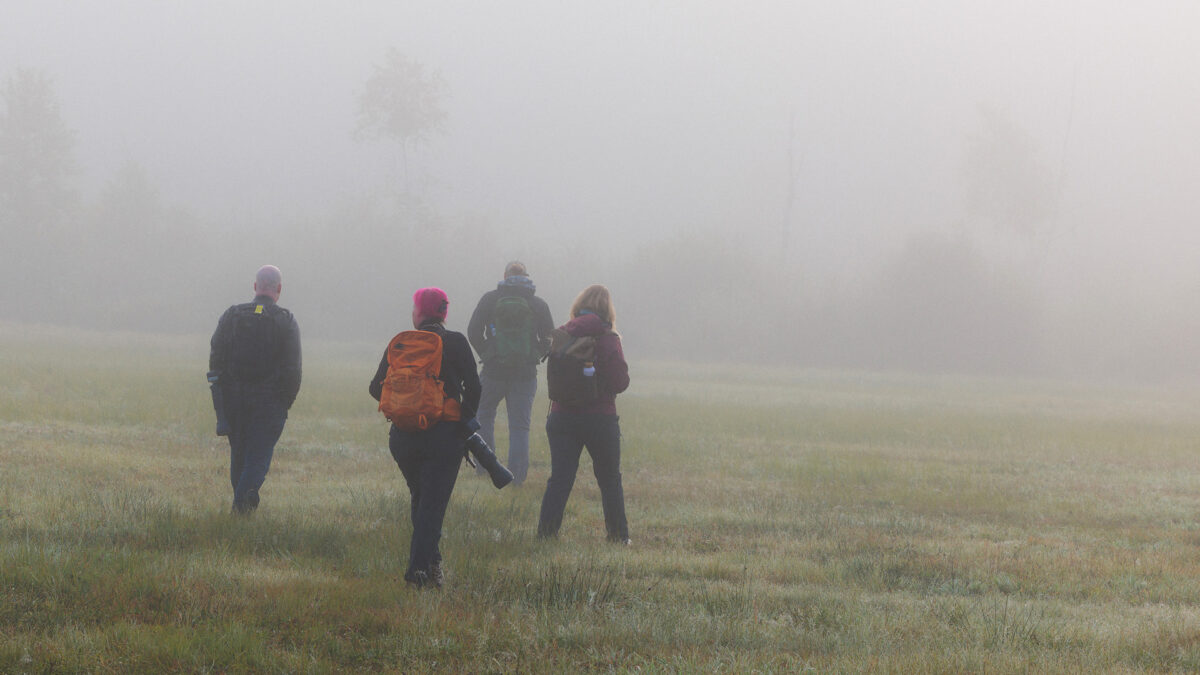
Cindy Theunissen of NatureScanner, who lives in the Netherlands where she created and runs the biggest nature travel platform in the country. She has pink hair, extensive travel experience, and a big heart I could see even before I knew her.
Ellen de Middelaer of Ellensvoyage, who started her blog moved by the love for photography and travelling. She is bright and funny, and loves researching thoroughly her destinations; she is a very organised traveller.
Jonathan Ramael of Trot Op!, who works as a photographer and travel journalist, both on commission and for his own travel website. He has a dry sense of humour: his intentional jokes don’t always land as well as the unintentional ones.
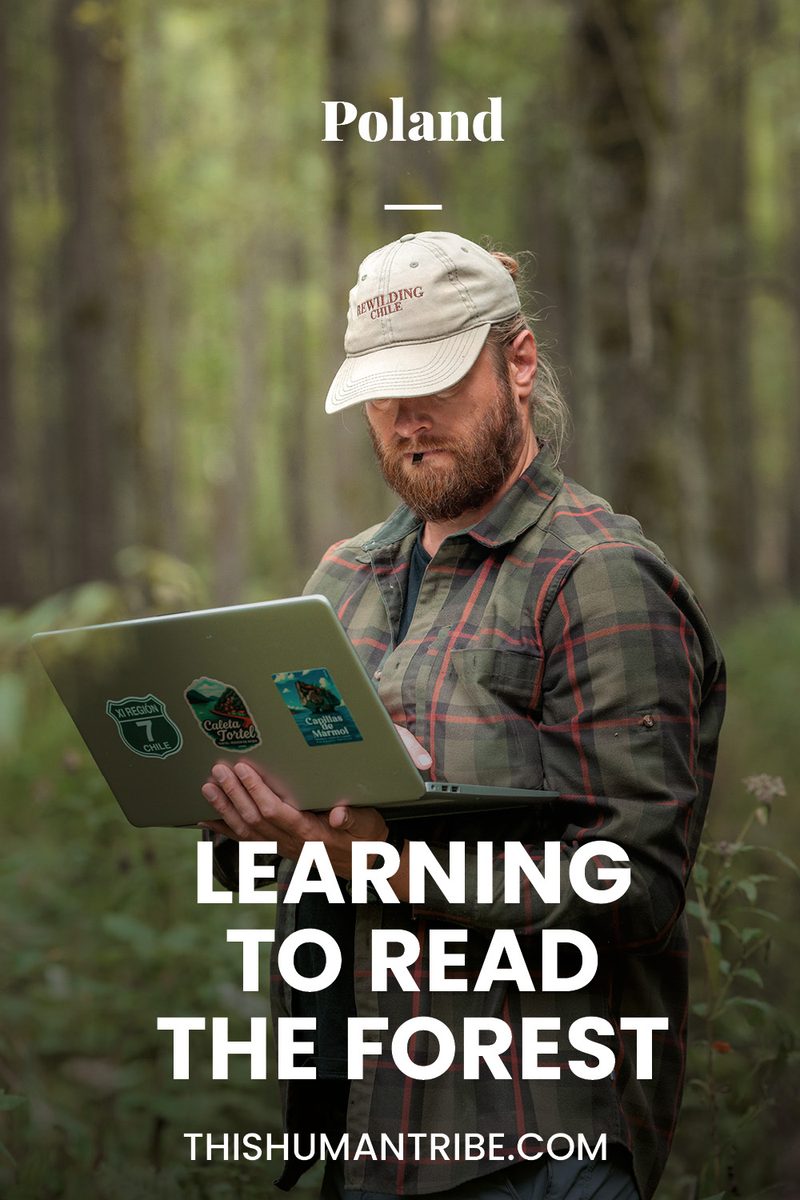
And then there were Jyl and I, with This Human Tribe and our focus on people, places and the intersection between the two.
Bia-wo-ve-zia: primeval forest of Poland
Hands were shaken and names were asked for two or three times, but we quickly had to get on the move, since the tasting menu of our trip was quite rich.
Before long this unusual fellowship of the ring was formed and loaded onto a van, direction: the primeval Białowieża forest in the Podlasie region, and later the Borecka forest, in Masuria.
After a car journey of about three hours, passing through a number of small rural villages, we turned onto a dirt track into the Białowieża Forest. Beneath our general tiredness there was a keen curiosity to find out what the start of this trip would be like, and we finally arrived at our first destination, the most peaceful of places: a couple of gorgeous cottages nestled amongst the greenery and silence of Białowieża, just a walk away from a clearing where bison come to graze every day. And we all agreed to drop off our bags, stretch for 30 minutes and immediately go on a little exploration.
The animals didn’t read the itinerary
I’ve never seen a wolf in the wild, so I was really excited at the prospect of seeing one. I’ve never even seen a wolf that wasn’t in the wild, for that matter, let alone a bison. Of course, I knew you can’t control nature, but I set off feeling very excited at the prospect of spotting one deep in the green.
To tell the truth, I was a little apprehensive: as a creature of the lowlands, accustomed to gentle sand dunes and open spaces, vast expanses where the hand of humans is heavily felt, I wasn’t sure about the code of conduct deep within a primeval forest. At the same time, I was sure I would be well looked after, and I’m pleased to report that I wasn’t wrong.
I imagined sitting on a prairie in silence, equipped with cameras and journals, waiting for the animals to show up. And we did that several times. Once immediately upon arrival, the second one at dawn, after a walk that brought us along two paths, a sniff around some posts at a crossroads to see if the wolves had marked their territory, and two mud pools where deer, bison and moose usually bathe.
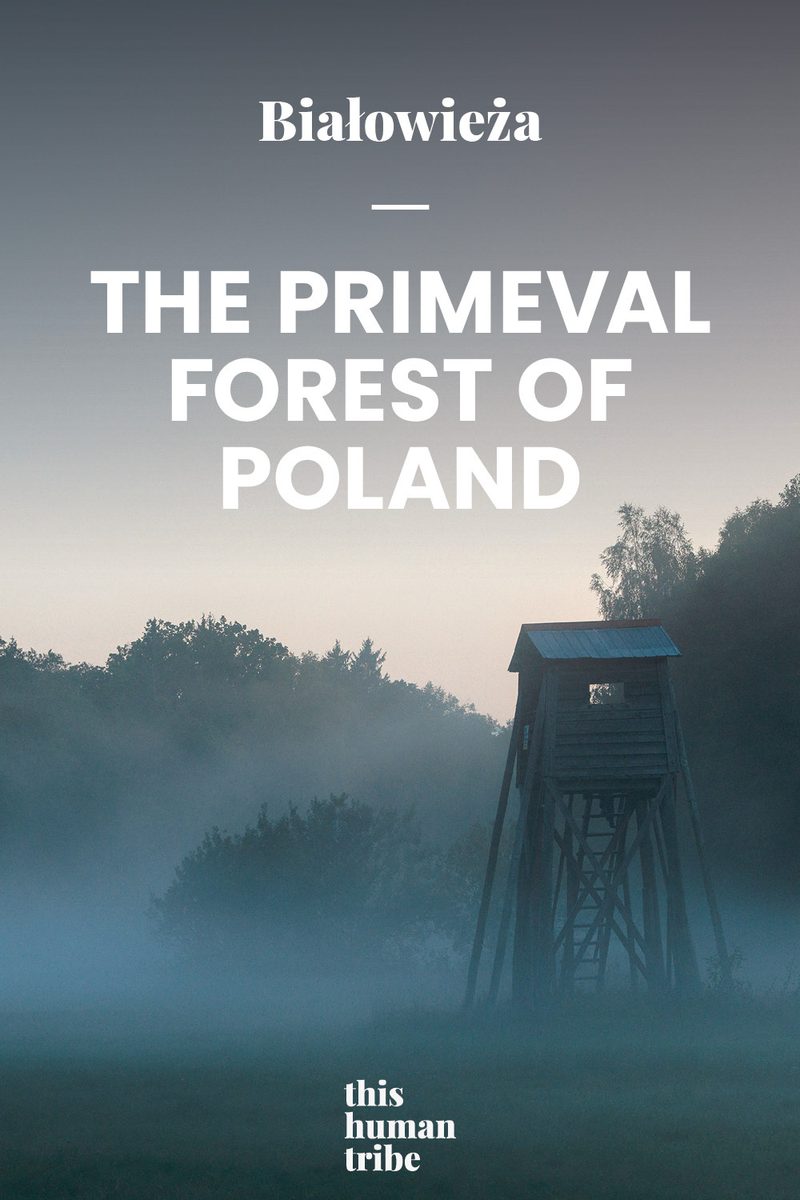
We sat in silence, watching, making no sound, whilst the mist rose around the hunting stand. And we waited, and waited. Various birds sang in turn, the mosquitoes tried to feast on the few centimetres of exposed skin, and every now and then we could hear the sound of a twig snapping in the distance, under the weight of some animal. The echo of a stag’s bellow cut through the silence of dawn time and time again. But, as far as seeing goes, we didn’t have much luck there.


I was, I can’t deny it, a bit sad. I was hoping to see a wolf. On the first dawn, when we’d actually gone in search of bison at the place where they go to feed. I thought, ‘Wow, you need patience to do this’ and then, ‘But hang on a moment, I’ve got plenty of patience‘ – why am I suddenly surprised that I have to use it here?’ In short, I scaled back my expectations almost straight away.
Obviously, patience is a key ingredient, but it doesn’t guarantee success. And I find there’s a sense of justice in that. I think it’s immensely fair that there are still areas and things that require effort without any guarantee of a result.
On a related note, I realised just how noisy we humans can be. With all our gear, waterproof jackets, boots and everything else. It didn’t take me long to remember my place in this forest – who the guest is, and at the same time, who poses a danger to whom. No wonder the animals stayed hidden.
I had fun imagining the scene from another perspective too: wolves lying in wait in the forest, warning one another to keep quiet so they could spot the motionless humans on the prairie, who in turn were hoping to spot the bison. Perhaps they followed us, sniffing around the corners, to see if we’d marked our territory somewhere too.
Learning to read the forest — Łukasz
By the time the first night fell, I already had a deep conversation with our guide. We were at the cabin, sharing a sauna with the whole pack, and outside there was a bath filled with lagoon water where we could cool off between sessions. As we went in and out of the sauna, the group naturally split up a little, and at one point I found myself outside with Jyl and Łukasz, gazing at the Milky Way.
Our bodies were bare, and there was nothing more beautifully unremarkable than that. The silence of the sleeping primeval forest all around us was touching. There, it was impossible not to think about how the little things make life the biggest, which made the point of the conversation we were having all the more poignant: how forgetting that we are animals has caused a great deal of trouble for humankind, and how the magic of places like Białowieża lies in bringing us back to that realisation, helping us realign with nature.
In the following days I would’ve learned that Łukasz worked as an investigative and travel journalist for over a decade before founding and running both the DZIKO Foundation that protects Poland’s wildlife, and Totem Expeditions, which offers professional animal tracking experiences. And this isn’t just a job; it’s a way of life lived in accordance with big ideals, a daily commitment on many fronts to promote the conservation of the forest.
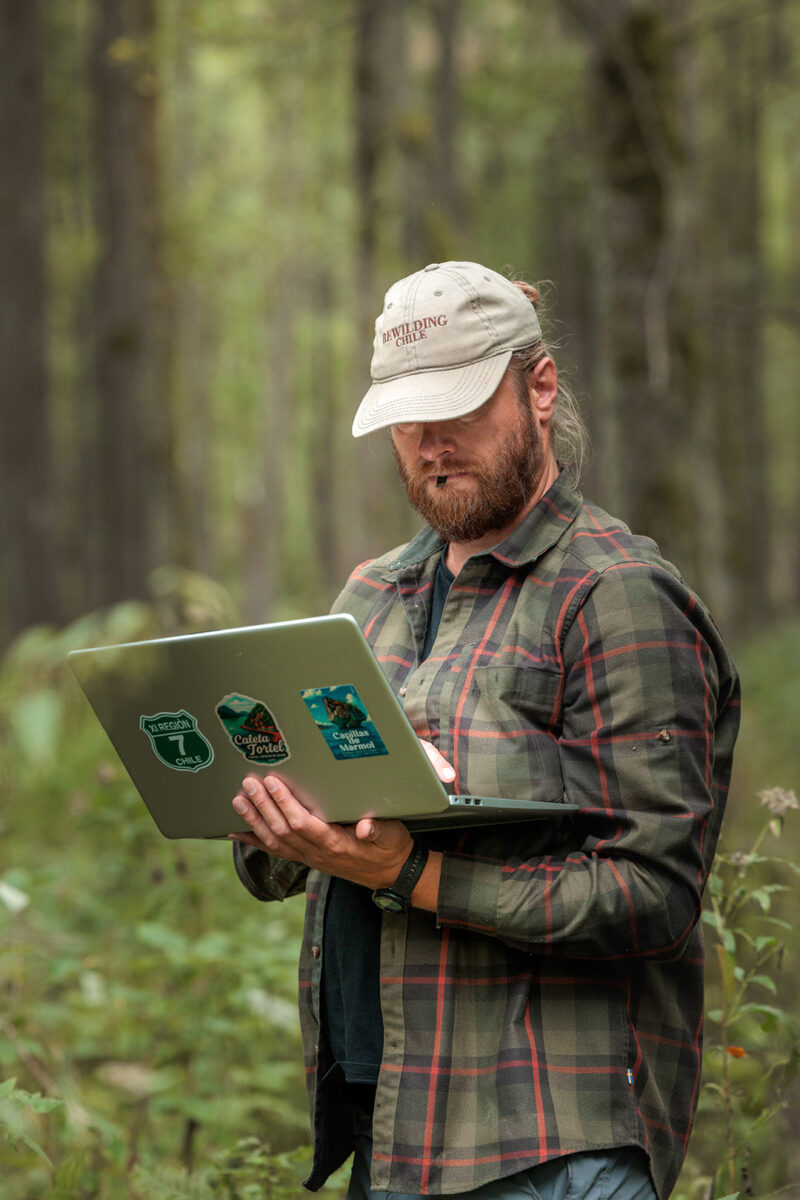
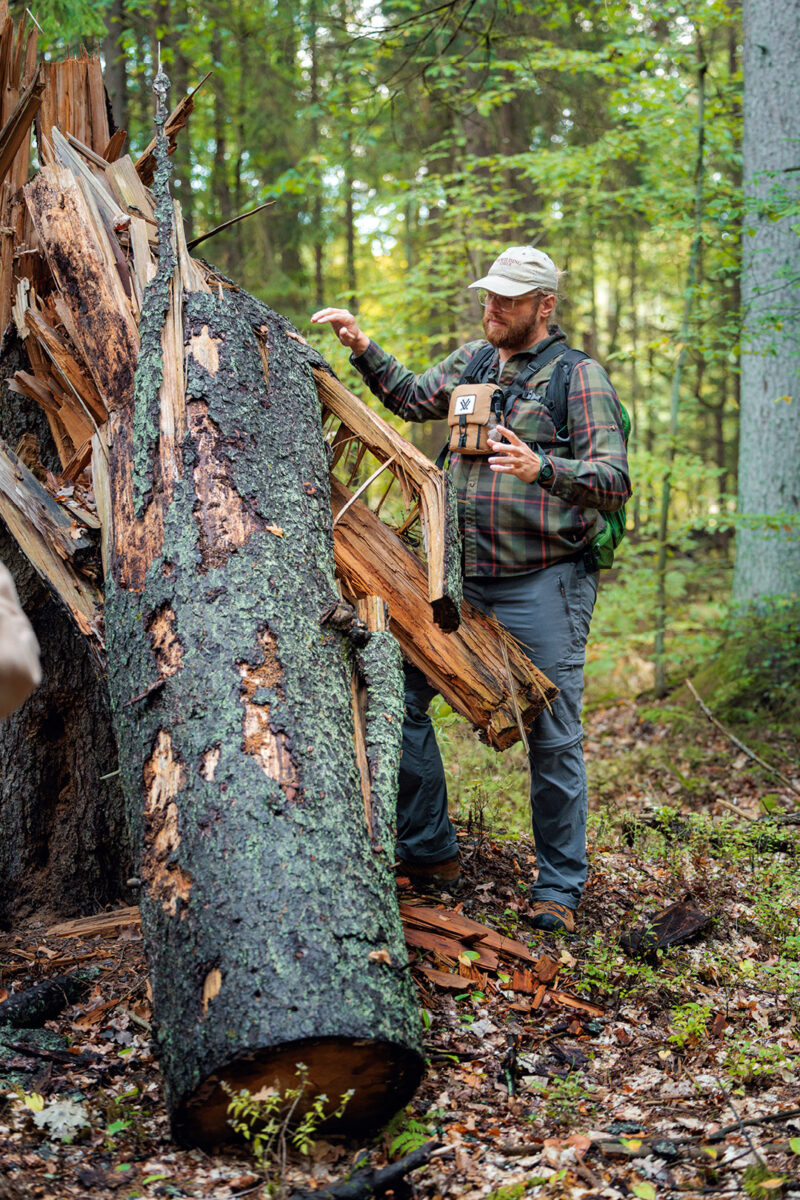
From him we learnt that there are three fundamental elements when tracking wild animals in a primeval forest:
- Observe: Do so carefully, even in places where there seems to be nothing. This involves using sight, but also touch, smell, and all those senses we rely on the least.
- Wait: As the experience teaches, you need patience – lots of it.
- Be quiet: This is the essential part of a camouflage technique designed to make us – if not invisible – then at least part of the natural habitat.
I saw Łukasz crouch down and sniff a tree trunk, trace a footprint in the ground with his fingers, jump into the lake, and howl and groan into the wind. We didn’t find any bison or wolves, but we did find plenty of evidence of their presence and that of other animals, including the traces of a bucking match between stags.
Wiktor: welcome to Poland
As I mentioned earlier, It took us a while to get here but it was worth every km: I couldn’t have imagined a better start to our first trip to Poland.
A handful of wooden cabins in the woody gates of Białowieża forest, built with dedication and decorated with love. The details told a story of care and attention. In our cottage there were tables made from slices of tree trunks, a picture frame featuring the original nails from the old building, hand-carved wooden sugar bowls, and a magnificent wood-burning stove with majolica tiles that looked as though it could heat the whole cabin during the cold months.
Upon arriving we met Wiktor Sawicki, the owner: a quirky sense of humour, a ‘can-do’ attitude, and an obvious enthusiasm for hosting people. He would go on to pamper and spoil us as if we were first cousins who hadn’t seen each other for a long time!
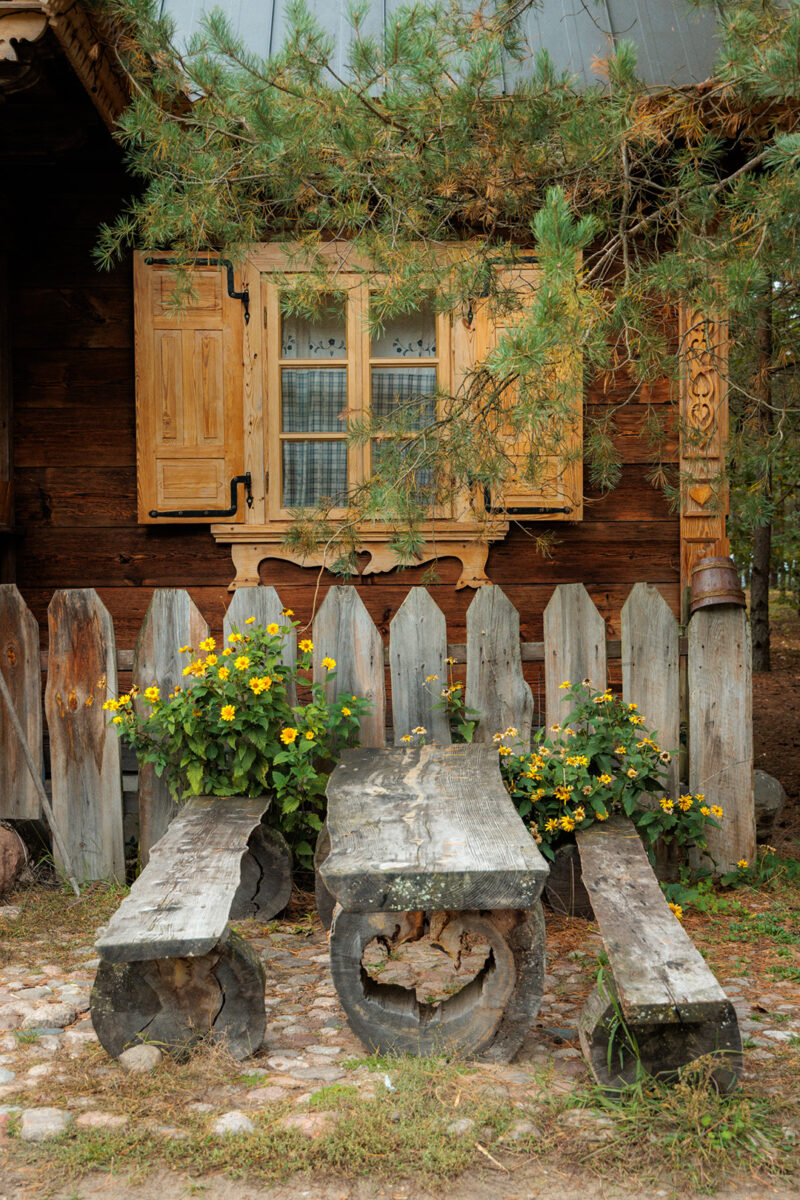
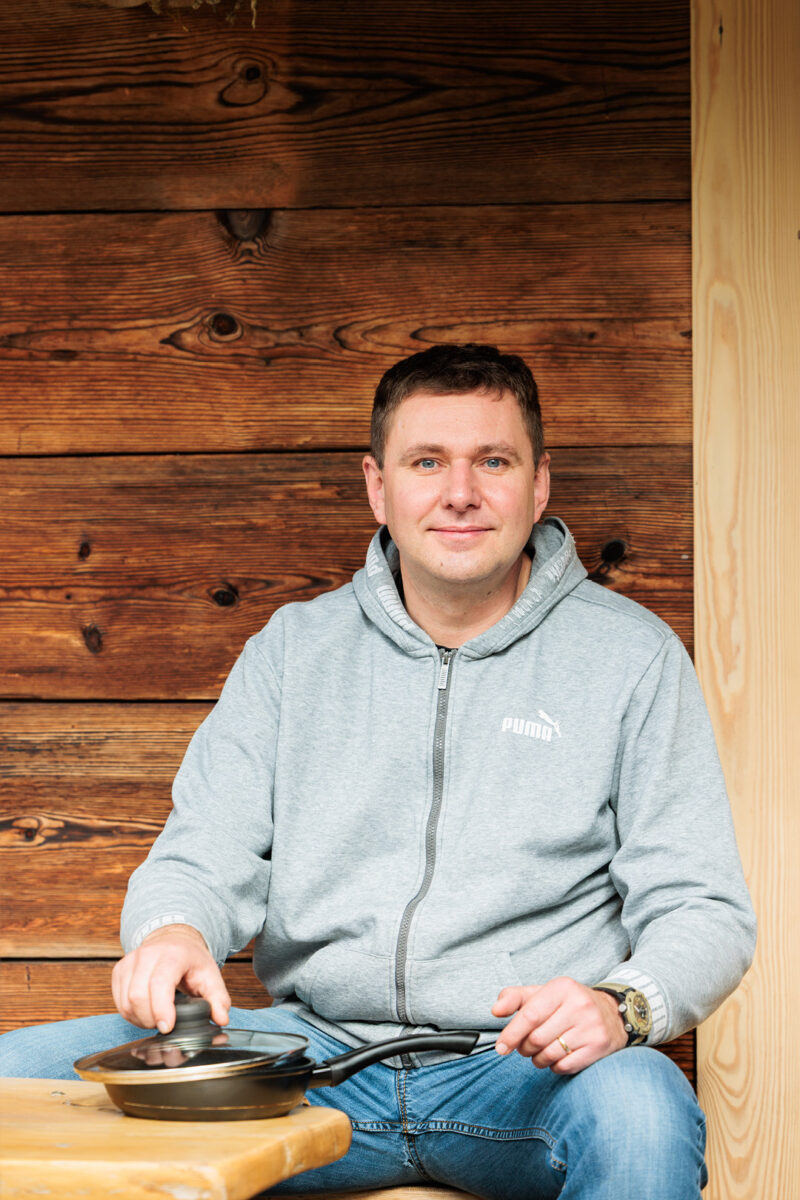
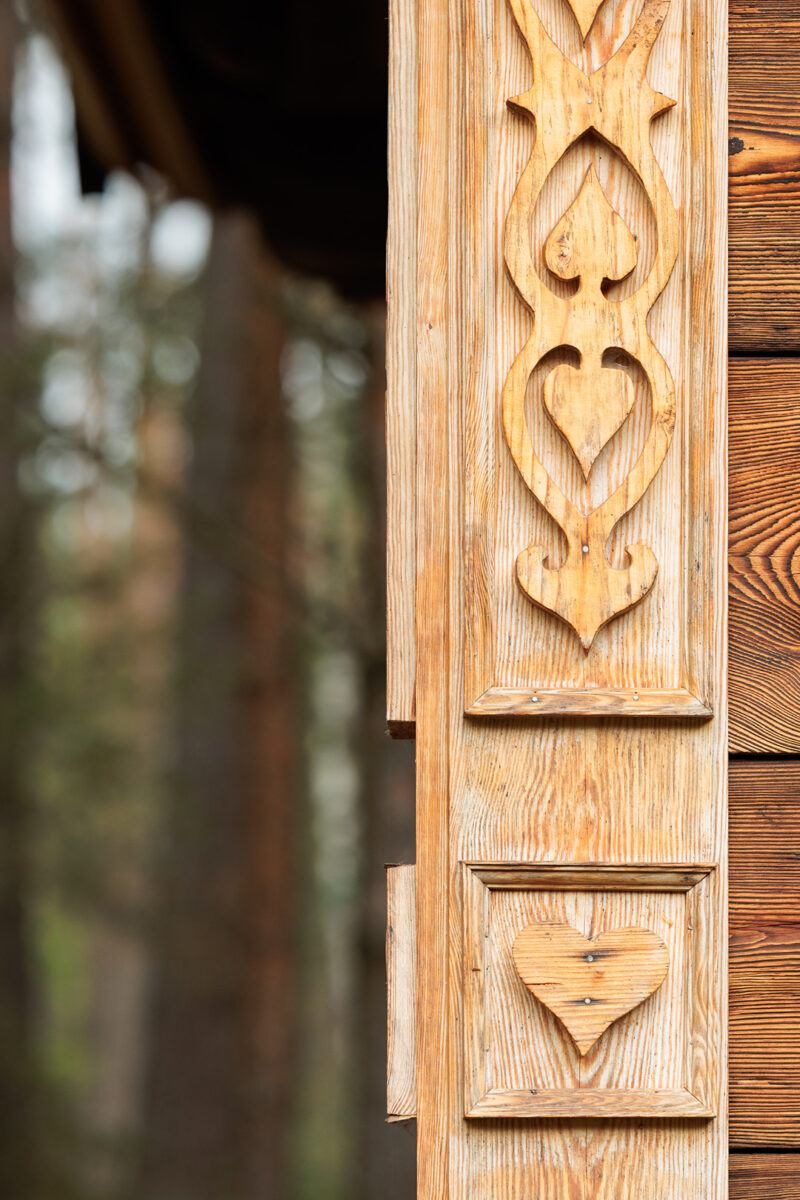
Wiktor cooked a delicious hearty dinner (and then breakfast) using local ingredients, prepared a sauna as dark and hot as a mother’s womb, and made sure we sampled — well, “sampled” might be an understatement — his vodka beneath the most stunning tapestry of stars I had seen in a long while. Above all, he was dedicated to ensuring we had an utterly memorable experience. And he succeeded, oh, how he succeeded!
A different perspective: Dariusz and the balloon
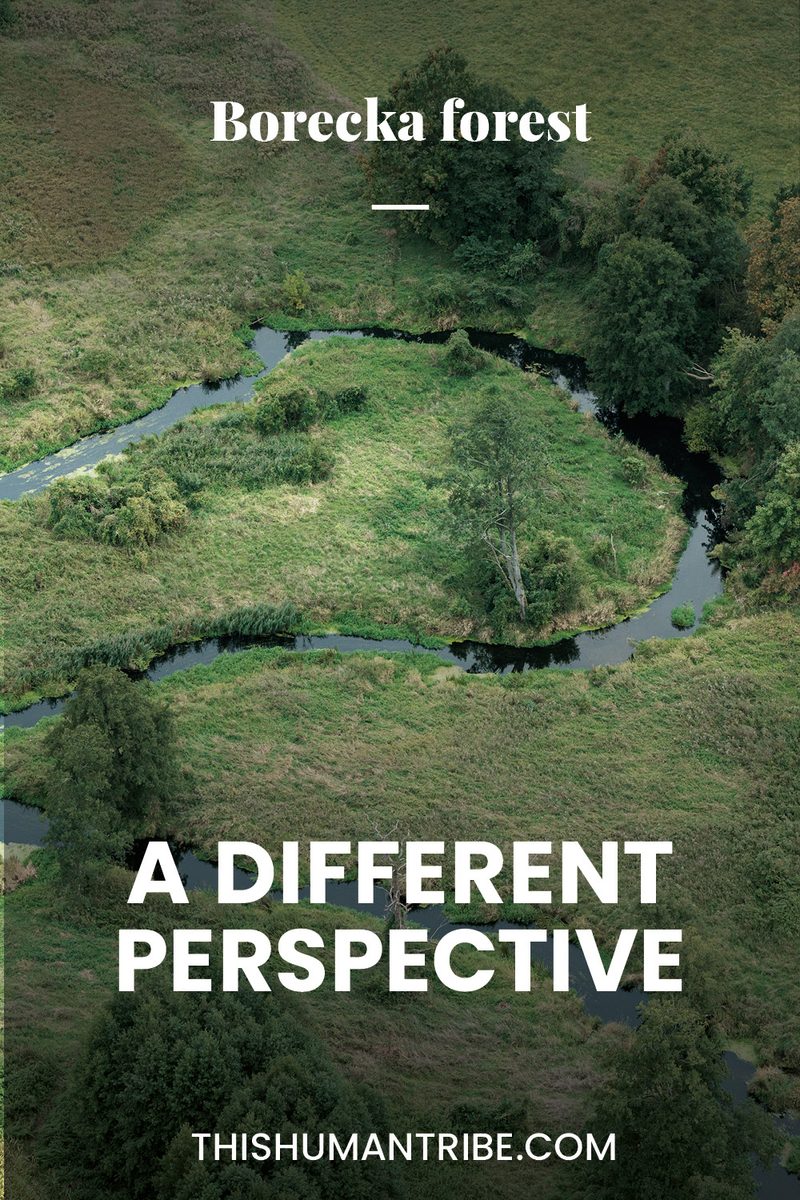
It was our first hot-air balloon ride, for both Jyl and me, and it was a great experience. Deer, cows, moose, rivers winding their way through ploughed fields and patches of the Borecka forest, a group of young people celebrating outside a house who waved and yelled, inviting us down for a drink.
Dariusz Brzozowski, our flight master, immediately proved himself to be a skilled pilot, taking great care to explain all the safety measures necessary for a safe and enjoyable flight. On board, we watched him manoeuvre the balloon and gauge the wind and distances with the confidence of someone who’s been doing this all his life.


So I asked him, how many years has this been his life? 39, 40 next year. He told us about how he got started, the flights in Australia, the Gordon Bennett Cups he’d taken part in, and his altitude record of 11.125 metres in the stratosphere. He has more than 4,000 hours of flight time, split between gas-filled and hot-air balloons, which on its own is quite impressive, but what struck me most was the way he spoke about his mentor, Marek Matuszelański: a deeply moving sense of reverence and respect, even though, after all these years spent in the air, I imagine he could well call himself a master in his own right.
We were higher up, above fields and built-up areas rather than actual forest, so there isn’t much I learnt in that regard from up there. However, one thing became even clearer: we are moving through a country whose natural environment is powerful and unspoilt, yet remarkably little known.
When we landed, Dariusz asked our collective help to deflate and fold up the balloon: for a moment there, I thought I’d found a new calling!
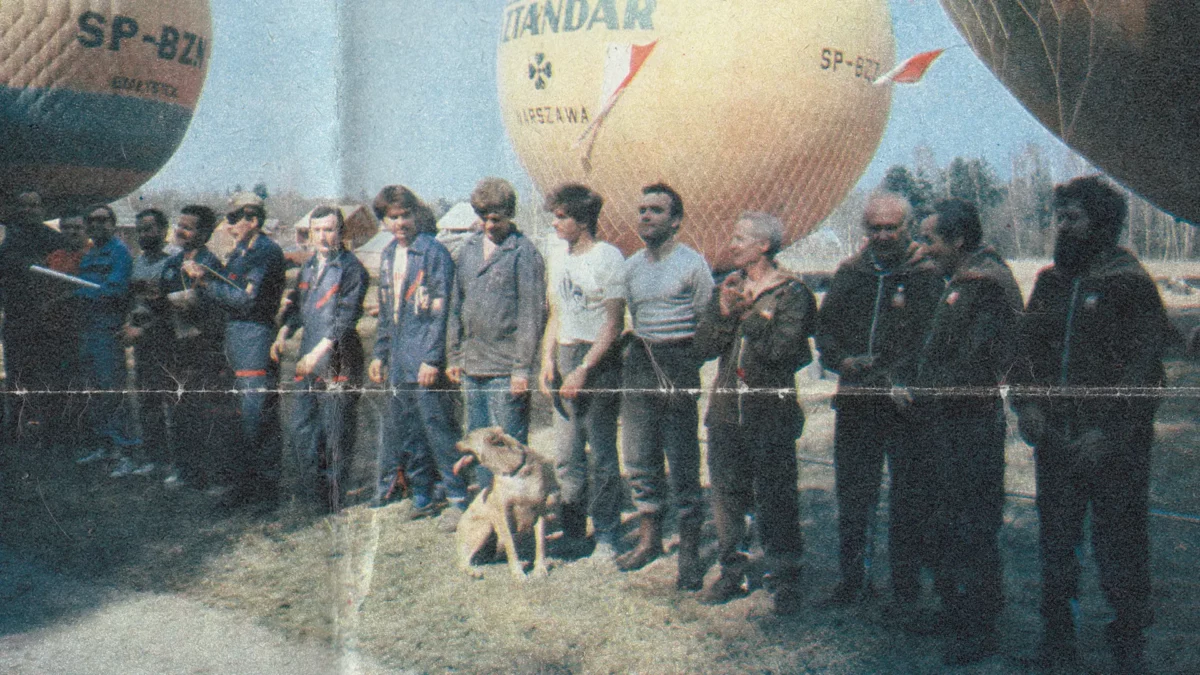
Once we’d finished, prosecco and wine glasses appeared out of nowhere to celebrate the flight, and it was then that Dariusz shared that one scary time things went terribly wrong but he managed to save both himself and his companion. Despite his credentials, he never bragged, he was simply telling a part of his story. Yet, the whole time, we could sense his true passion in each word, see it in each movement: can you picture what dedication looks like after a 40 years love story?
Beneath the forest: Iwona and Terra Desolata
Our meeting with Iwona Lewoc and the Terra Desolata team was brief but interesting: they took us to see the remains of a cemetery discovered during excavations in the Pisz forest, where they are now searching for the remains of settlements.
So far, they have found cremated human bones, bracelets, rings, brooches, and an unidentified pot, most dating from a period between 500 and 700 AD and belonging to the early Prussian people. The foundation’s aim is to research and share the archaeological and historical heritage of Masuria and Podlasie, bringing the region’s forgotten Baltic past to life.
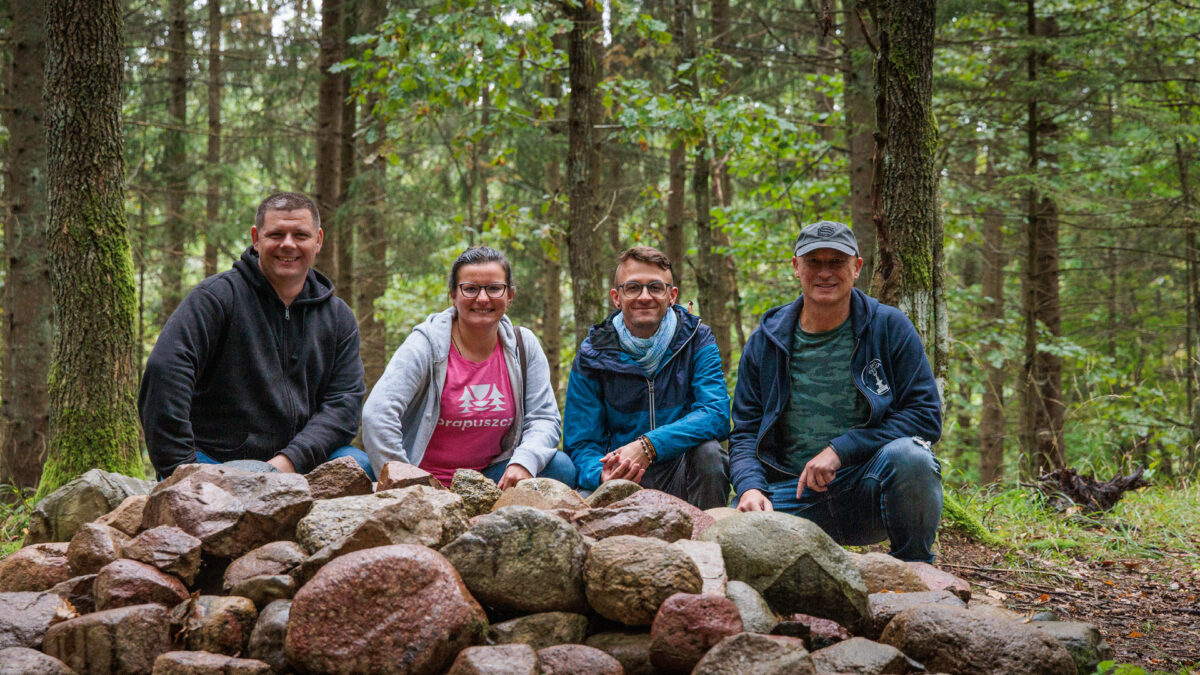
Through archeological research and education, Terra Desolata wishes to inspire local communities to explore, understand and preserve their cultural heritage. Iwona and her team seemed all very knowledgeable and enthusiastic. I would have loved to see some of the remains and dive a bit deeper than we had the time to do, but I hope we’ll get a chance next time!
Piotr and the bees that returned to the forest
We first met Piotr Pilasiewicz in his urban hive: the museum of wild beekeeping in Augustów, in north-eastern Poland. A scent of wax and honey greeted us at the entrance; it felt as though we were in a woodland, and not by chance.
In a few days, he would have given us a practical demonstration in the forest, but now it was story time! He told us about the medieval tradition of Bartnictwo, which had almost disappeared and which, thanks to his efforts and those of others working towards this goal, has now been revived. This technique aims to return bees to the forests, where they can feed on natural food sources, and to harvest only small quantities of honey.
To do this, he works with hollow sections of tree trunks that can be opened and closed; he installs them at the tops of living trees, where the bees can move in and build their hive. Piotr therefore goes into the forest to maintain the hives, using an ancient climbing technique involving a rope fitted with a seat, which allows him to sit comfortably whilst carrying out tasks that require time and a stable surface.
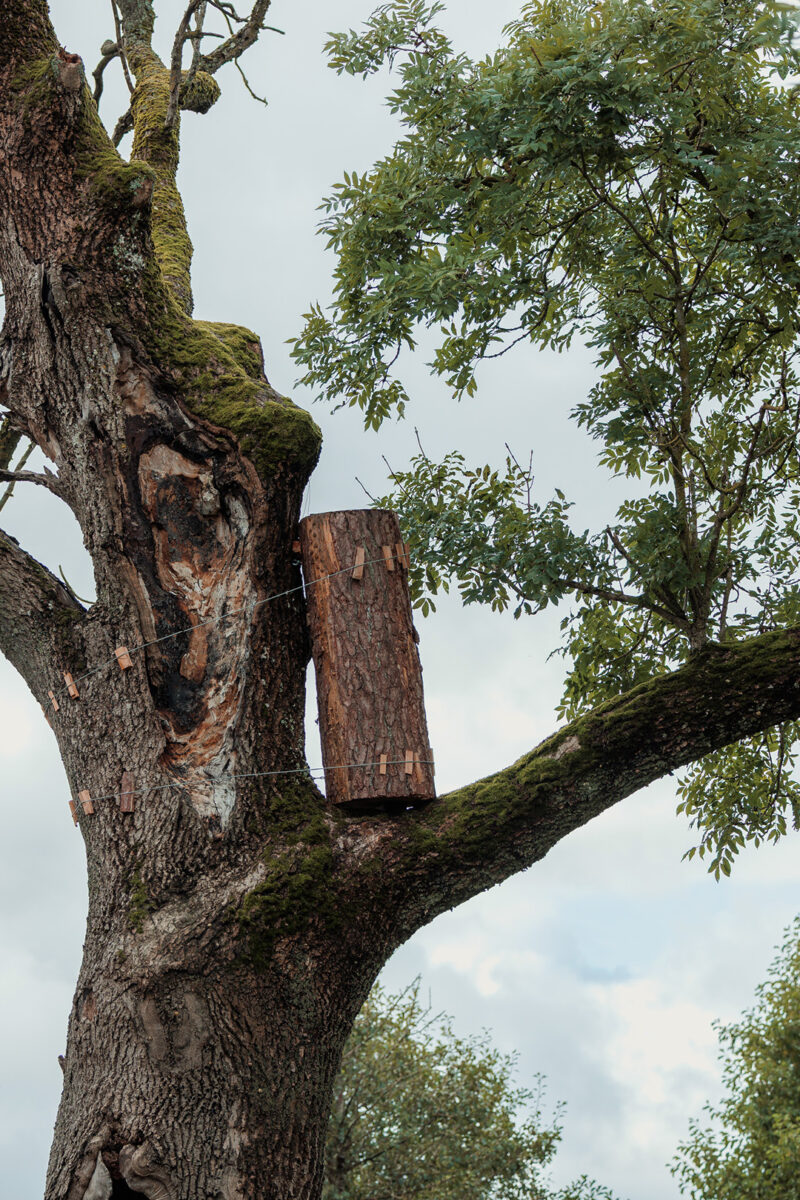
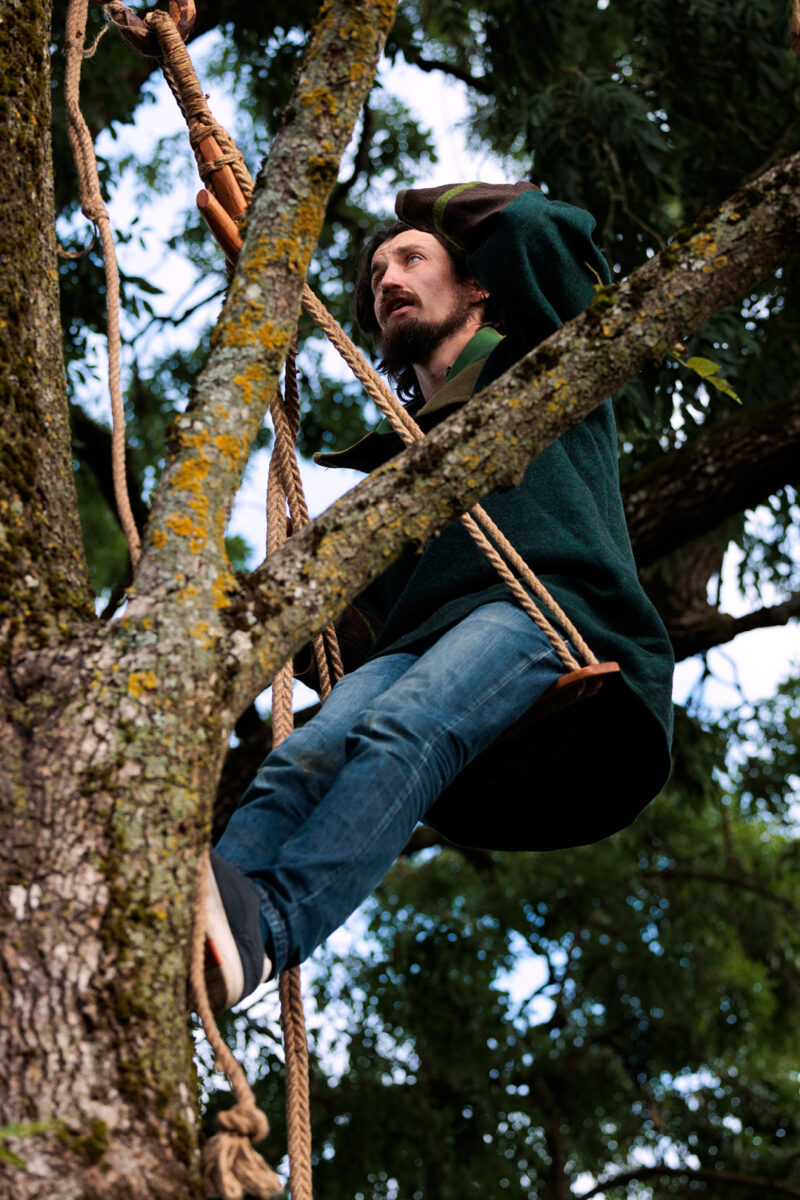
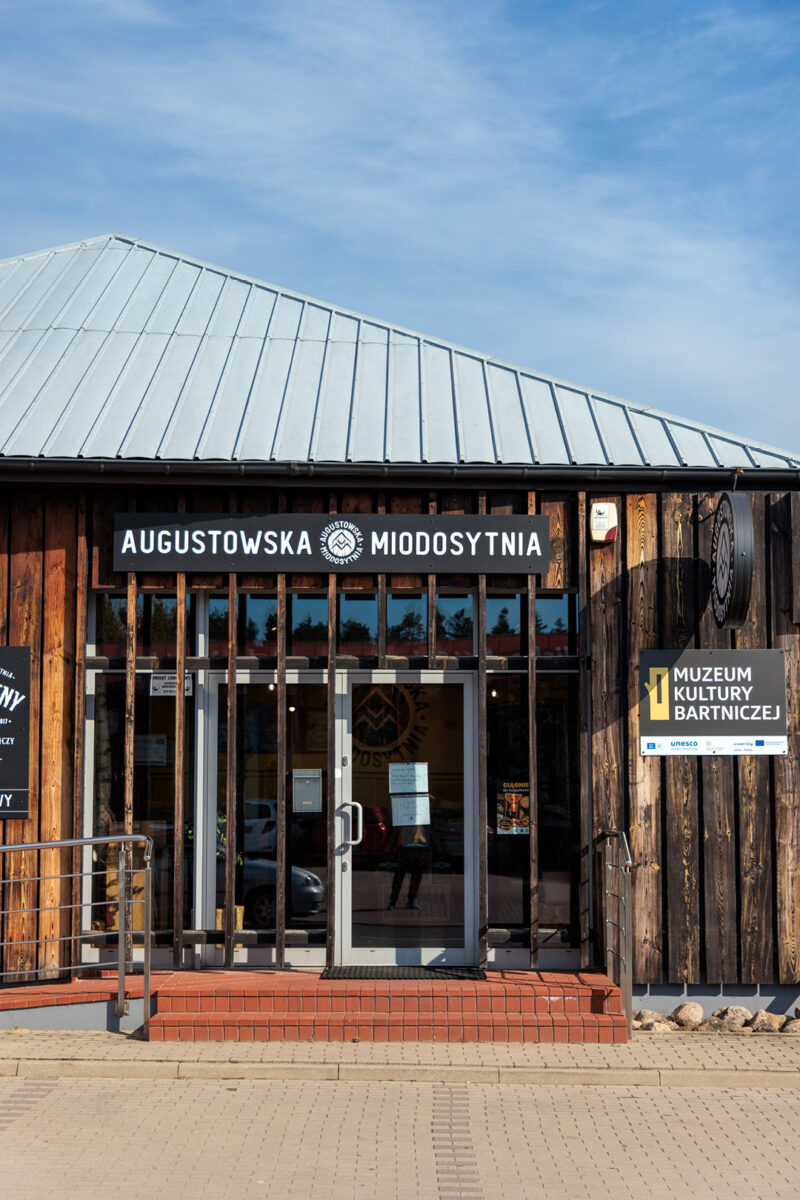
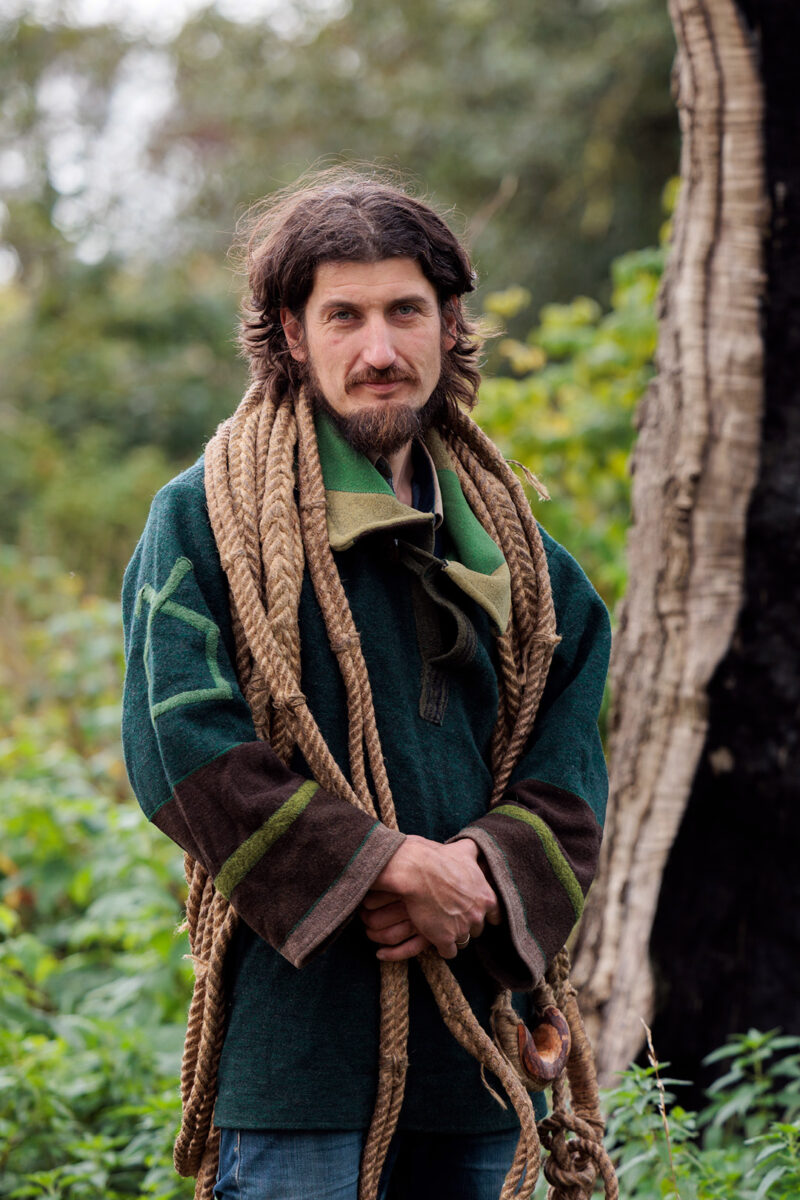
He gave us a practical demonstration the second time we met him, in the forest, which was quite informative. We also had the chance to sample the mead he produces with his business partner: a real delicacy! And we’re not the only ones who think so, given the many awards won by the products from his artisanal business, Augustowska Miodosytnia.
His interest in wild beekeeping began in the early 2000s following a trip to Belarus, where he discovered this tradition, which had once also existed in Poland.
The determination to save the bees has brought tangible results: thanks to the efforts of Piotr and the Bractwo Bartne (the Brotherhood of Wild Beekeeping), in 2020 UNESCO included wild beekeeping in Poland and Belarus on the Representative List of the Intangible Cultural Heritage of Humanity: a huge step forward for a practice so vital to the preservation of biodiversity.
In Europe, there has been much buzz about the importance of bees to humanity, but it seems that we often end up applying modern solutions to modern problems, and that these contemporary techniques frequently lead to further problems that need resolving. I find what Piotr has done commendable: his techniques are based on observation and the reproduction of ancient methods, such as making his own tools and climbing ropes.
It is true that we cannot go back in time, but we could always try to follow his example: one beehive at a time, one pull of the rope after another, he has slowly restored certain balances that seemed lost forever.
The things we didn’t see…
We saw wild horses from different proximity levels, a moose and a few deer from the hot air balloon, plenty of cows, a hare, and more deer running into the forest from the side of the road; these were quite brief encounters. And yet, this was not much considering the amount of animals that were most likely in the areas we visited.
We didn’t see bison, wolves nor lynxes. And yet it doesn’t mean they weren’t there. In fact, their traces were probably all around us, and we might just not know how to look beyond what our eyes can see.
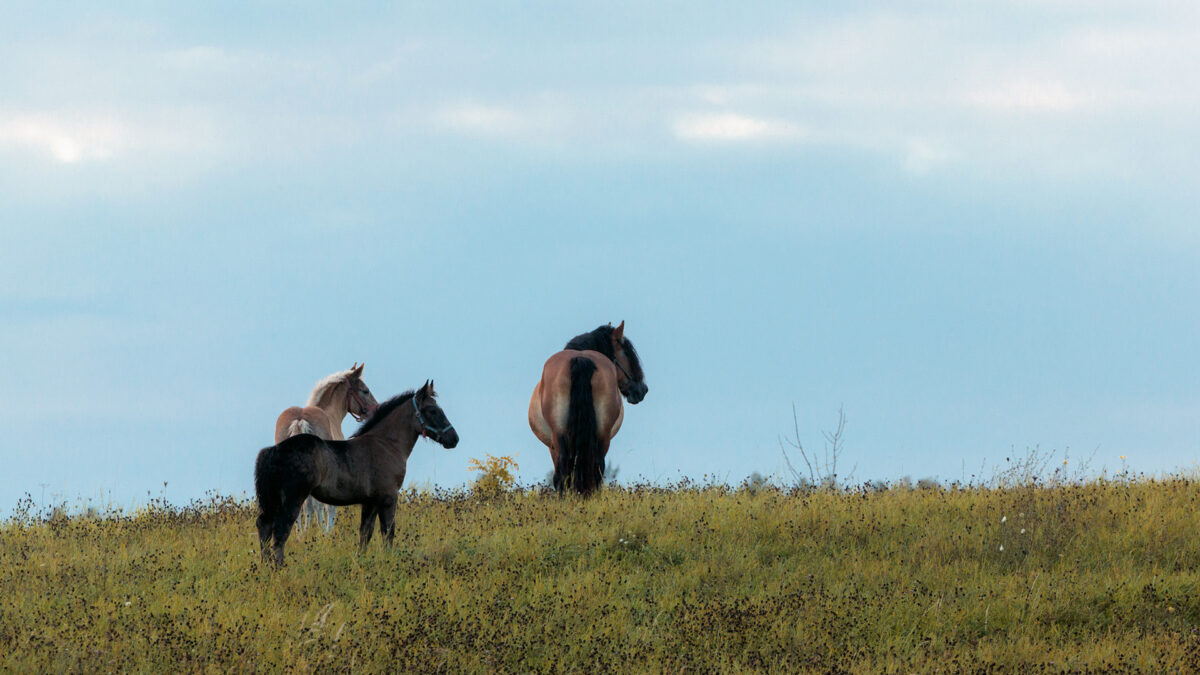
Patience is a key ingredient, and that we brought with us, but it doesn’t guarantee success. I believe that there’s a sense of justice in that. I think it’s immensely fair that there are still areas and things that require effort without any guarantee of a result.
I’ve never been the sort of person who believes that there’s us, and then there’s nature; I’ve always known that we’re just animals in clothes – we’ve merely taken a detour to have a spin on the merry-go-round of consciousness, but then at every bend the GPS redirects us back home. Whether or not we actually go there is another matter entirely, but perhaps that’s why we take plants from their natural habitats to bring them indoors and then boast about having a green thumb. For the same reason, we take some supplements to make up for what we no longer eat, and we take more to mimic the circadian rhythm we used to have when we had few means of manipulating darkness or light.
… The ones we should to see more of
Now, more than ever, we live in an age where, study after study, science is starting prove something humans have instinctively known for centuries: immersion in green spaces can lower physiological stress and blood pressure; greater exposure to nature is associated with lower cardiovascular risk and mortality; and even something as simple as putting our hands in biologically rich soil can alter the microbes living on our skin and influence our immune responses.
So, no, I hadn’t expected beforehand that I’d just be looking with my eyes. But this trip was certainly a wonderful opportunity that reminded me of all the things we miss when we’re fixated on one idea. Luckily, I switched off the GPS for a while and let the stars guide me home, where I could marvel at all the wilderness around me bursting with life.


Although we didn’t see many of the animals we’d come here to see, we did meet the people who devoted their lives to protecting this vulnerable habitat and its traditions. Once again, as we have learned so many times before, it’s about people and the places they call home.
Perhaps that was the real discovery: wonder comes less from rushing towards expectations than from pacing ourselves enough to sense what is already around us.
The forest is full of life; we simply need to learn how to look.
WeI’d like to thank Visit Poland, Totem Expedition and all the people we met along the way for this unforgettable journey into the wild primeval forests of Poland. Of all the possible avenues, a press trip turned out to be an unexpected way of opening a door to a place we’d like to explore in greater depth in the future. Hopefully, we’ll see you soon.
It’s all about the people!
Below find the information of the people mentioned in this article, in case you ever found yourself in this corner of the world or if you feel like doing some more reading about this area!
Polska – Polish Tourism Organisation
Visit Poland – Instagram
Podlasie; Warmii and Masuria
Wiktor Sawicki
Ostoja Dębosze – Facebook
Dariusz Brzozowski
First Class Ballooning – Facebook
Iwona Lewoc
Terra Desolata – Instagram
Piotr Piłasiewicz
Museum of Beekeeping Culture – Instagram
Łukasz Długowski
Totem Expeditions – Instagram
Cindy Theunissen
NatureScanner – Instagram
Ellen de Middelaer
Ellens Voyage – Instagram
If you enjoy this article please pin it!